
UST in Focus: It's been quite a run for the Treasury market. The 10-year spiked over 4.60% in late July and entered August at 4.74% (the highest since early 2025). Ahead of the Fed's meeting, the benchmark yield broke through 5% for the first time since 2007, and on September 16, the Fed raised rates by a quarter point, its first hike of a new tightening cycle. Yields kept climbing into early October, hitting a 20-year high of 5.31% on October 5.
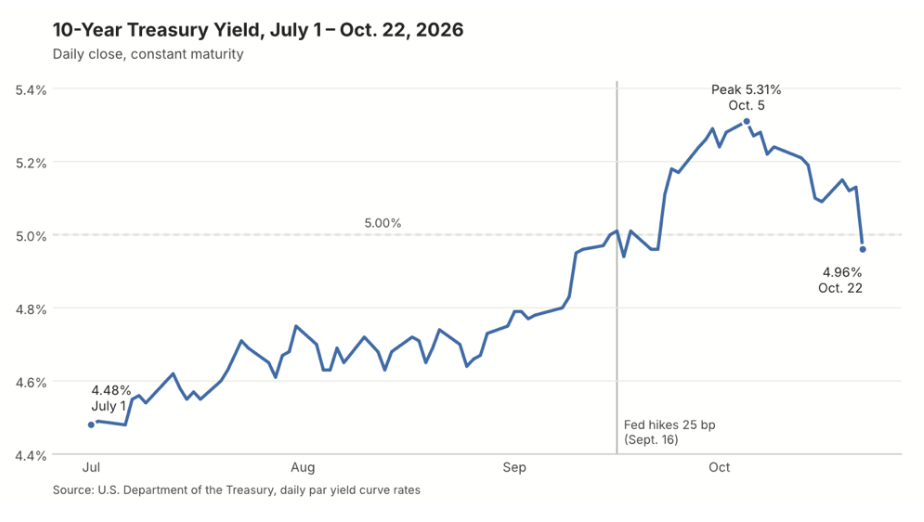
The run-up was due to the "usual suspects": record U.S. deficits causing "bond vigilantes" to demand term premium, AI hyperscalers issuing massive amounts of highly rated corporate debt, oil prices/inflation fears, etc. But in recent weeks, the U.S. Treasury has made a comeback. Circumstances both here and abroad have focused markets on the UST's "traditional" role during stressed market conditions.
Turning Point, October 7 Treasury Auction: The U.S. government sold $39 billion in 10-year notes at a high yield of 5.300% (the highest auction yield since 2002). The demand was very strong at this yield and set a "top" in the 10-year.
- Offering Amount: $39 billion
- High Yield: 5.300% (compared to 4.834% at the last sale)
- Indirect Bidders (foreign/international demand): Claimed 80.3% of the auction (above the 72.4% average). Very significant.
The unexpectedly strong demand helped ease investor fears and caused Treasury yields to back down from multi-year highs shortly after the sale. This reflects recent major comments by Fed Chairman Warsh, when he argued that higher Treasury yields are "tightening" financial conditions on their own, allowing the Fed to "step back" and "let the bond market do the work."
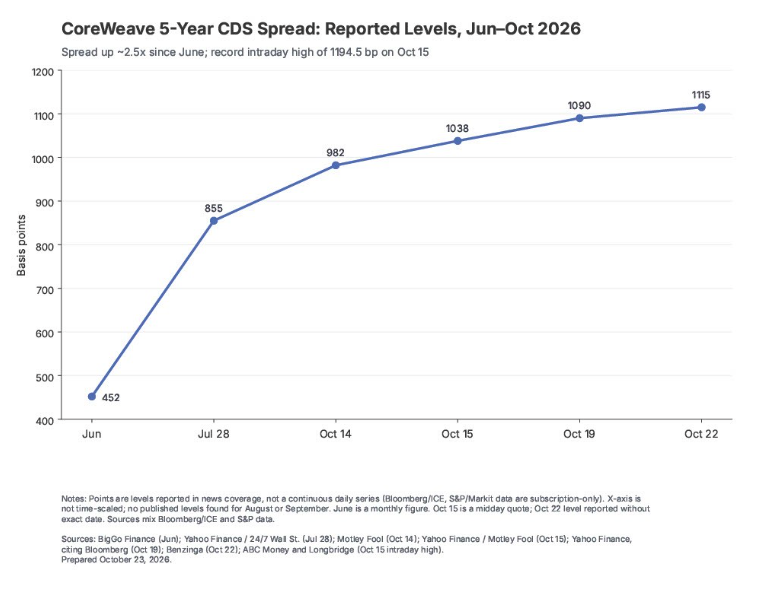
Early this month, a huge drop in Treasury yields came from an unexpected place: the massive AI buildout, along with how much it's costing and the availability of capital. Credit default swap spreads spiked among some of the leading neocloud providers as market concern grew over "circular financing" among these companies (Company A gives money or a loan to Company B, and then Company B uses that capital to purchase chips/hardware from Company A). CoreWeave's credit default swap spreads spiked past 1,100 basis points (a major distress level). The phrase "negative free cash flow" is becoming too common among these providers for investors' appetites. Again, the U.S. Treasury acted in its classic "safe haven" role as the destination for a "flight to quality" as investors dumped tech stocks and poured money into U.S. Treasuries.
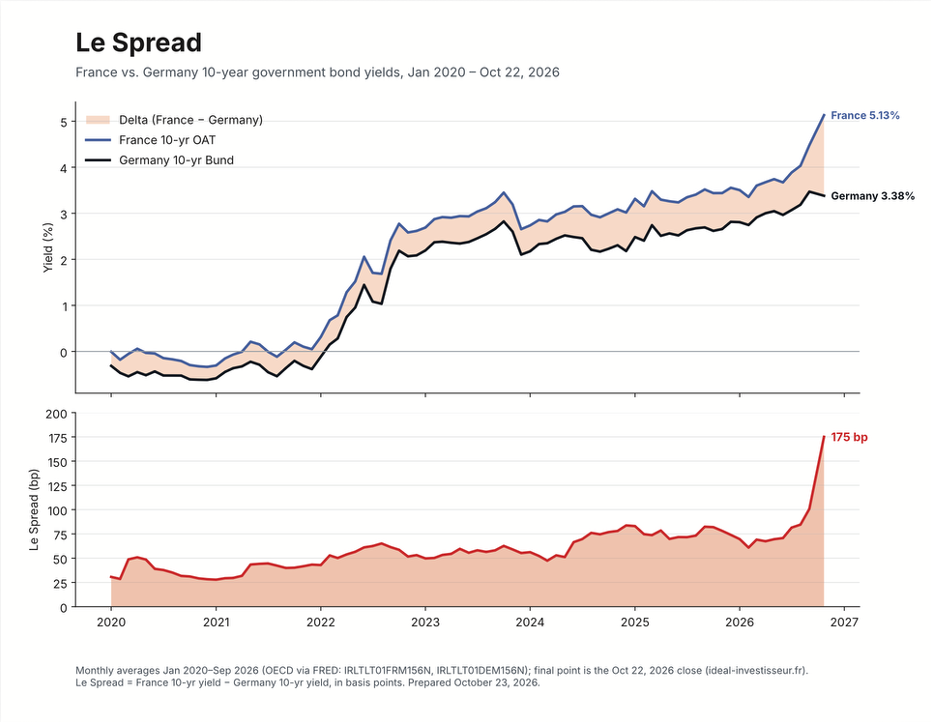
Another contributor to the U.S. Treasury comeback: France. The recent protests and social unrest have highlighted France's debt issues. Unlike the U.S., France does not issue its own currency and therefore cannot "print its way out" of deficit spending. France's 10-year yield broke above 5% on October 21 for the first time since 2002. The government expects a 2026 deficit of about 5.4% of GDP, well above the EU's 3% limit, and debt is heading toward 120% of GDP in a politically gridlocked nation with a weakened government. The EU may stage an intervention, but for now, the possibility of a sovereign bond default by a G7 nation is another "fear factor" in the market. (See below: "Le Spread" of French bonds over German bonds is at a record high.)
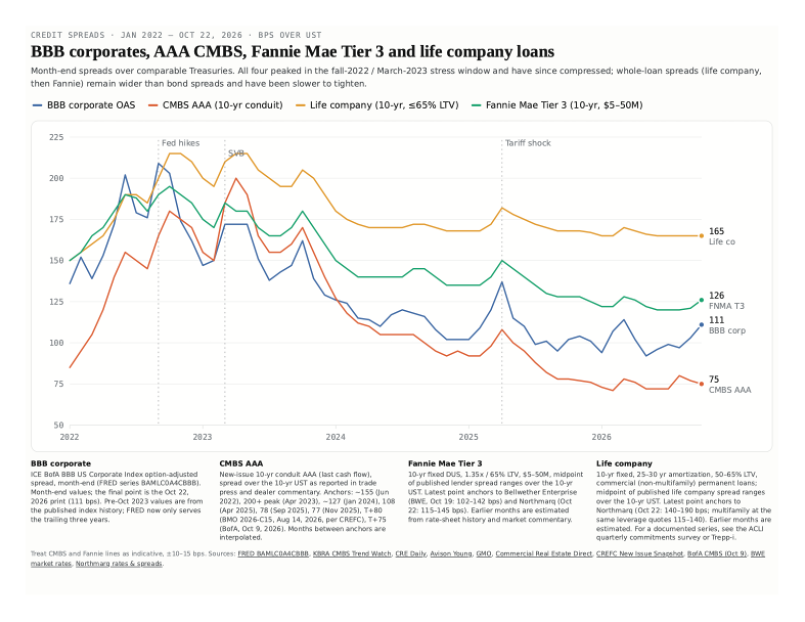
The recent volatility in credit markets is concerning, especially considering the massive scale of the worldwide AI financing market (with much of it concentrated in the U.S.). Credit spreads have been stable and historically tight over recent years (see chart below). The "other side" of Treasury yields dropping on a flight to quality is often widening credit spreads, as investors/lenders demand more compensation for risk. There has been some movement (see chart below).
Next week: Fed is expected to "hold" rates steady with the midterms approaching. Stay tuned…
By David R. Pascale, Jr., Senior Director at George Smith Partners.