
- U.S. airports have been financed by tax-exempt municipal bonds for half a century, but with federal grant programs fully deployed and the Passenger Facility Charge (PFC) frozen since 2000, the marginal dollar is shifting toward privately sponsored structures.
- Institutional capital has found its entry points: terminal-level P3s at JFK and a $14-50 billion bid stack for Dulles on the commercial side, and record-setting fixed-base operator (FBO) and hangar transactions including Apollo and GIC's roughly $10 billion Atlantic Aviation deal at the fully private end.
- For sponsors in aviation real estate, every financing requires a bespoke capital stack, which makes execution the differentiator in a niche this young.
The assumption embedded in most conversations about airport finance is that airports are a public asset class, funded by tax-exempt municipal bonds and federal grants, and therefore outside the reach of private capital. That assumption was accurate for about fifty years of aviation development but is now only half the story.
The municipal bond remains the backbone of commercial airport finance, and the traditional machine is running at full throttle, with the muni market setting issuance records in 2025, driving some of the largest deals of the cycle. But the composition of the marginal dollar is changing, and the most interesting story in aviation infrastructure today sits at the private end of the runway, where FBOs, hangar campuses, and general aviation assets are trading at premium multiples and being financed with capital stacks that would look familiar to any commercial real estate sponsor.

The Public Stack Is Fraying
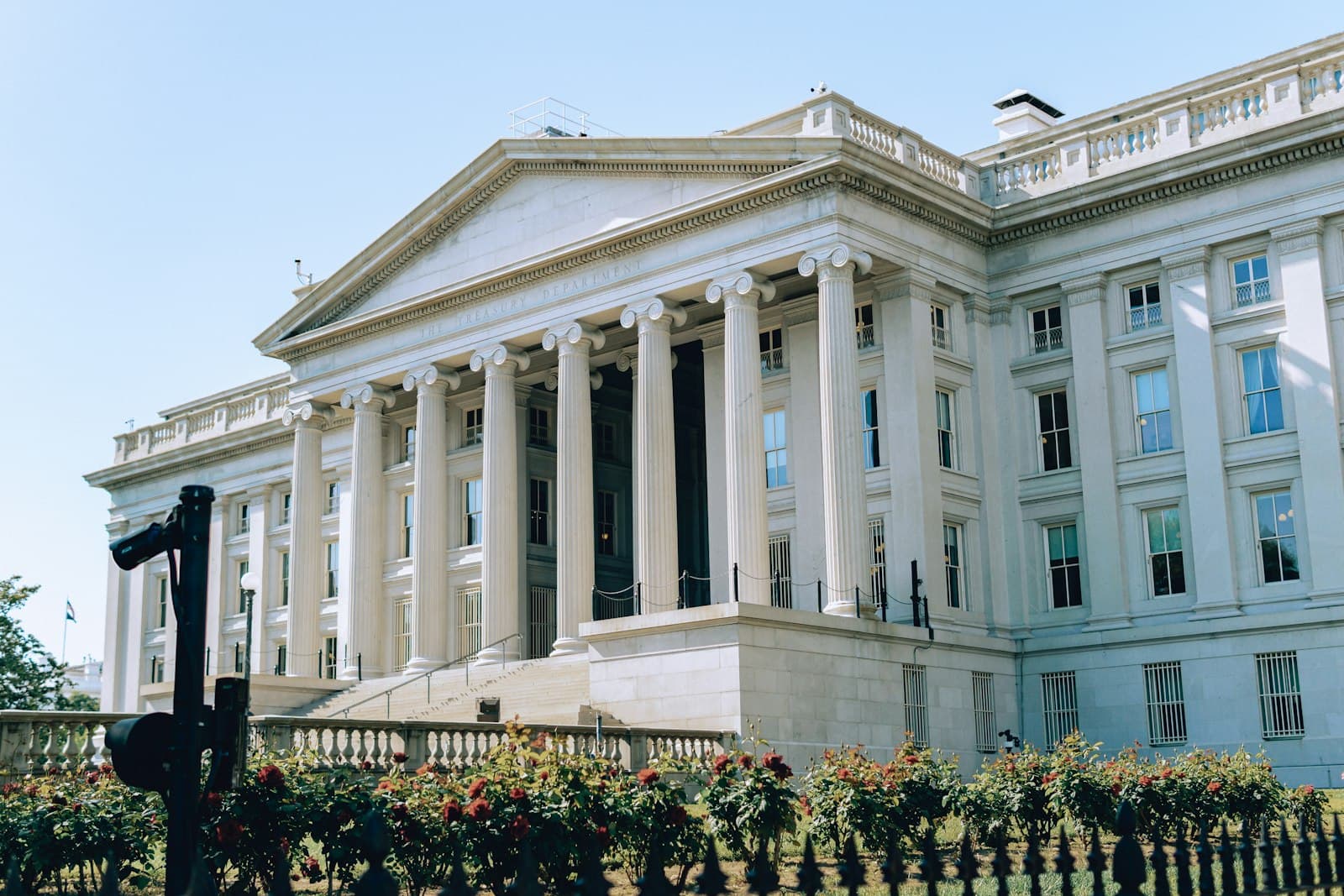
The traditional airport funding model rests on four legs: airport-generated revenues, tax-exempt revenue bonds, federal grants, and Passenger Facility Charges (PFCs). Two of those legs are visibly weakening. The Infrastructure Investment and Jobs Act's (IIJA) allocated roughly $15 billion for airport projects across the country, $5 billion of which was designated for airport terminals. Since 2022, almost $1 billion has been awarded each year for upgrades at terminals across the country- spanning major international hubs and local airports as shown in the graphic below. While the PFC has been capped at two $4.50 charges per passenger since 2000, its real purchasing power roughly halved by inflation over that period. Set that erosion against Airports Council International- North America's (ACI-NA) estimate of $174 billion in capital needs through 2029, with U.S. enplanements crossing one billion for the first time in 2019 and again in 2024 since the cataclysmic drop in air travel due to the Covid-19 pandemic- and the funding delta becomes the single most important force reshaping how this infrastructure gets built.

Private Capital Through the Terminal Door
The response has not been privatization in the European sense, but something closer to a structured recapitalization of individual assets. Of JFK's $19 billion redevelopment, roughly $15 billion comes from private sponsor equity and project-level bonds repaid solely from terminal cash flows, with demand risk transferred off the Port Authority's balance sheet and onto sponsors and bondholders who are being compensated for it. Investor appetite has been abundant, with Terminal 6's order book reaching nearly $11 billion against a $1.95 billion issuance in 2024, and Washington has taken notice. The DOT's December 2025 Request for Information on a Dulles concession drew six bids proposing between $14 billion and $50 billion of private investment. Global infrastructure capital that once flowed to European airports is actively hunting for U.S. entry points, and the terminal-level structure is the door it has found.
The Fully Private End of the Runway
Then there is the segment where the capital stack was never public to begin with. FBOs and hangar campuses are, at their core, aviation real estate: ground leases typically on airport land, entitlement-constrained supply, credit-quality tenancy, and operating margins of 20 to 30 percent at established locations. The institutional bid has arrived in force, with Bain Capital entering the sector in January through its acquisition of APP Jet Center, and Apollo and GIC agreeing this spring to acquire a majority stake in Atlantic Aviation from KKR at a valuation near $10 billion. The moat is structural, as new airports are not being built, and existing ones increasingly restrict new FBO development.
The hangar shortage is its own investable thesis, and Sky Harbour's January financing illustrates how creatively the niche is accessing capital, drawing $450 million in orders for a $150 million conduit bond issue while pairing it with a $200 million bank warehouse facility to fund campuses from Dulles to Salt Lake City. A private developer, on leased public land, tapping tax-exempt debt, bank credit, and public equity simultaneously is the very indicative of where aviation finance might be heading.
Capital Markets Strategies
A hangar developer or FBO sponsor is assembling a bespoke stack, potentially blending conduit bonds, private credit, construction-to-perm structures, and preferred equity in a single process, each priced off a different investor base with different underwriting instincts. The transactions that close efficiently share a common profile: defensible in-place or contracted income, a sponsor with genuine conviction and aviation expertise, and capital calibrated to the specific gap in the stack rather than a generic mandate. For the owner or developer raising that capital, the right advisor knows how conduit desks, private credit funds, and equity investors each underwrite. In a segment this young, the ability to frame the same deal for each of those audiences is often what separates a marketed transaction from a closed one.